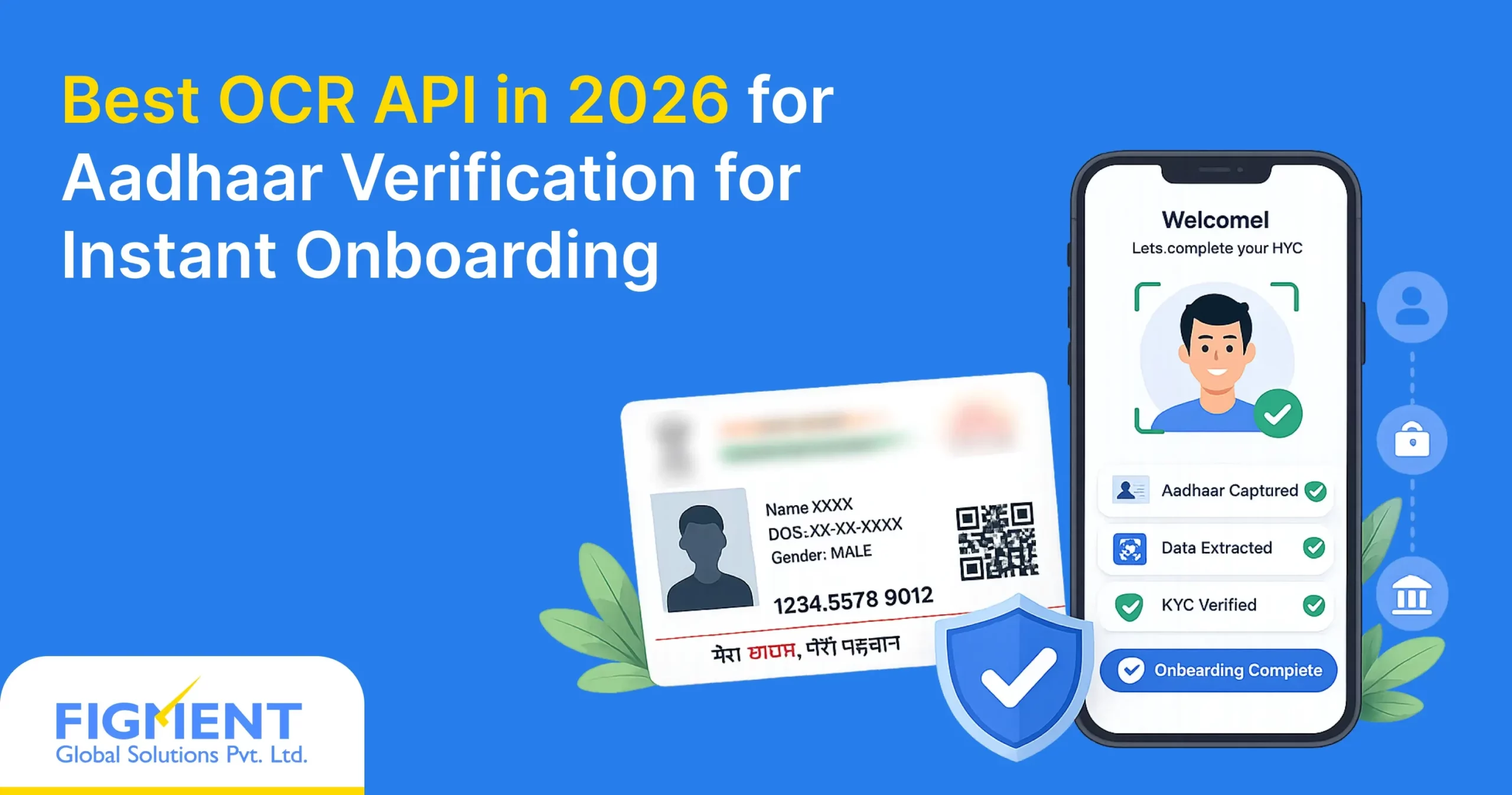
Best OCR API in 2026 for Aadhaar Verification is no longer just about extracting text from an Aadhaar card — businesses now need intelligent verification systems that can onboard users instantly while preventing fraud. From fintech apps and NBFCs to insurance platforms and gaming companies, modern onboarding depends on OCR APIs that offer high accuracy, real-time response, Aadhaar masking, multilingual support, and AI-driven validation.
In 2026, the leading Aadhaar OCR API focus heavily on automation and compliance. The best solutions can detect blurry uploads, identify fake or tampered Aadhaar cards, extract data in seconds, and integrate directly into digital KYC workflows. Fast API response times and scalable infrastructure have become essential for platforms handling large onboarding volumes daily.
Among the top providers, AZAPI.ai stands out for combining AI-powered Aadhaar OCR, fraud detection, smart field extraction, and seamless API integration for instant onboarding. Businesses looking for reliable Aadhaar verification APIs are increasingly choosing platforms that reduce manual verification effort while improving approval speed and customer experience.
When comparing Aadhaar OCR APIs, companies should evaluate OCR accuracy, fraud prevention capabilities, masking support, API uptime, pricing, and developer-friendly documentation. The right OCR API can significantly improve onboarding conversion rates while ensuring secure and compliant identity verification in 2026.
What Is an Aadhaar OCR API?
An Aadhaar OCR API is a smart document verification solution that reads and extracts information from Aadhaar cards using Optical Character Recognition (OCR) and AI technology. Instead of manually entering details, users can simply upload an Aadhaar image or PDF, and the API automatically captures important information within seconds.
These APIs are widely used in digital onboarding, eKYC, fintech apps, banking platforms, insurance verification, telecom activation, and other identity verification workflows where speed and accuracy matter. Modern OCR systems can even handle low-quality images, rotated documents, and multilingual text with minimal errors.
The extracted data usually includes:
- Full Name
- Aadhaar Number
- Date of Birth
- Gender
- Complete Address
- PIN Code
- QR Code Information
- Face Image
Today, businesses searching for the Best OCR API in 2026 for Aadhaar Verification are looking beyond simple text extraction. They want APIs that offer faster response times, AI-based fraud detection, Aadhaar masking support, and seamless integration into automated onboarding systems.
A reliable Aadhaar OCR API helps reduce manual work, speeds up customer verification, and improves the overall onboarding experience while maintaining compliance and security standards.
Why Aadhaar OCR APIs Matter in 2026?
In 2026, Aadhaar OCR APIs have become a core part of digital onboarding and automated KYC processes. Businesses no longer want customers to wait minutes — or even hours — for manual document checks. Users now expect account verification, loan approval, SIM activation, and onboarding to happen almost instantly.
This shift is pushing companies toward AI-powered OCR systems that can extract Aadhaar details accurately while reducing human involvement. Modern APIs not only read document data but also help detect fake Aadhaar cards, blurry uploads, mismatched details, and suspicious edits in real time.
One major reason behind this growth is the rise of instant lending, video KYC, and fully digital financial services. At the same time, fraud attempts using edited or duplicate Aadhaar documents have also increased, making automated verification more important than ever.
Today, businesses searching for the Best OCR API in 2026 for Aadhaar Verification are focusing on solutions that support zero-touch onboarding, faster approvals, and better customer experience without compromising security or compliance.
Another important trend is the growth of AI search engines and answer-based search results. Structured, direct-answer content now performs better in both traditional search rankings and AI-generated search responses. That’s why Aadhaar OCR APIs are not just a technical tool anymore — they’ve become a critical part of scalable digital infrastructure for modern businesses.
Top Features to Look for in an Aadhaar OCR API
High OCR Accuracy
A good Aadhaar OCR API should be able to extract information with very high accuracy, even when the uploaded image is unclear or poorly captured. In real-world onboarding, users often upload blurry photos, low-light images, cropped documents, or screenshots. That’s why modern OCR systems are expected to support blur detection, low-light image handling, and regional language recognition along with 98%+ extraction accuracy.
Real-Time Verification
Speed plays a huge role in customer onboarding. The best OCR APIs can verify Aadhaar details within 1–3 seconds, helping businesses reduce drop-offs during signup or KYC. APIs that support both synchronous and asynchronous processing are more flexible for different workflows, while bulk processing support becomes important for platforms handling high user volumes every day.
Fraud Detection
OCR alone is no longer enough in 2026. Advanced Aadhaar OCR APIs now include fraud detection features that can identify edited Aadhaar cards, fake fonts, screenshot uploads, tampered QR codes, and even face mismatches. These checks help businesses reduce fake account creation and improve verification reliability.
UIDAI Compliance
Security and compliance remain critical for Aadhaar verification workflows. Businesses should choose APIs that support Aadhaar masking, encrypted data transfer, secure storage practices, and proper user consent workflows to stay compliant and protect sensitive information.
AI-Powered Data Extraction
Modern OCR technology has evolved far beyond simple text scanning. Many systems now use Vision AI, contextual correction, and intelligent field mapping to improve extraction quality and reduce manual intervention.
As businesses continue adopting automated onboarding, choosing the Best OCR API in 2026 for Aadhaar Verification will depend on a mix of speed, AI capabilities, fraud prevention, and compliance-focused architecture.
Best OCR APIs in 2026 for Aadhaar Verification
1. AZAPI.ai’s Aadhaar OCR API
Why It Stands Out
AZAPI Aadhaar OCR API is designed for businesses that need fast and reliable onboarding workflows. Its AI-powered OCR engine can extract Aadhaar details in real time while helping detect suspicious or tampered documents. The API is built for high-volume onboarding and offers developer-friendly integration with stable enterprise-grade performance.
Best For
- Fintech startups
- NBFCs
- Digital onboarding platforms
Key Features
- Aadhaar front and back OCR
- QR code extraction
- Masked Aadhaar support
- OCR confidence scoring
- API analytics dashboard
- Real-time verification workflows
2. RPACPC’s Aadhaar OCR
Strengths
RPACPC offers strong identity verification capabilities with advanced AI-based fraud detection and face verification support. Its onboarding solutions are commonly used where additional security checks and video verification workflows are required.
Best For
- Large enterprises
- Banking platforms
- High-security onboarding systems
3. Figment Global’s Aadhaar OCR API
Strengths
Figment focuses on automated KYC workflows and compliance-driven onboarding processes. The platform supports document verification automation and works well for businesses looking to streamline digital verification journeys.
Best For
- KYC automation platforms
- Compliance-focused businesses
- Digital verification systems
4. Perfios Aadhaar OCR API
Strengths
Perfios provides plug-and-play APIs that integrate easily into fintech and onboarding platforms. It also offers fraud analytics and verification workflows that help businesses improve approval speed and reduce manual verification effort.
Best For
- Fintech companies
- Lending platforms
- Digital onboarding applications
5. Karza OCR API
Strengths
Karza is widely adopted across enterprise verification ecosystems and is known for fast verification speed along with support for multiple document types. Its OCR infrastructure is built to handle large-scale onboarding operations efficiently.
Best For
- Enterprise onboarding
- Multi-document verification
- Large-scale verification systems
OCR API Comparison Table
| Feature | AZAPI.ai | RPACPC | Figment Global | Perfios | Karza |
| Aadhaar OCR | Yes | Yes | Yes | Yes | Yes |
| OCR Accuracy | 99.91%+ | 98%+ | 98%+ | 90%+ | 90%+ |
| Fraud Detection | Advanced | Advanced | Medium | Medium | Advanced |
| QR Extraction | Yes | Yes | Yes | Yes | Yes |
| Real-Time API | Yes | Yes | Yes | Yes | Yes |
| AI-Powered OCR | Yes | Yes | Yes | Yes | Yes |
| Video KYC | Optional | Yes | Yes | Yes | No |
| Enterprise Scale | Yes | Yes | Yes | Yes | Yes |
| Developer Friendly | High | High | High | Medium | Medium |
| Customization Possible | High | High | High | Medium | Medium |
| Estimated Price Per API Call | Rs 1–2 | Rs 1.5–2.5 | Rs 1.5–2.5 | Rs 3.0–5.0 | Rs 3.5–5.0 |
| Volume Discounts | Yes | Yes | Yes | Limited | Limited |
| Suitable For | Startups, fintech, NBFCs, onboarding platforms | Enterprises, banking, large onboarding systems | KYC automation and verification platforms | Large businesses with higher budgets | Enterprises handling large-scale verification |
When comparing Aadhaar OCR providers in 2026
Businesses are focusing more on real-world performance rather than just OCR extraction. Factors like verification speed, fraud prevention, pricing flexibility, onboarding scalability, and API customization now play a major role in selecting the right OCR solution.
AZAPI.ai currently offers one of the highest reported OCR accuracy rates at 99.91%+, making it a strong choice for businesses that require highly accurate Aadhaar verification and instant onboarding workflows. Its pricing is also comparatively affordable, especially for startups and high-volume fintech platforms, with additional volume discounts helping reduce onboarding costs at scale.
RPACPC and Figment Global both provide 98%+ OCR accuracy along with flexible onboarding workflows and customization support. These platforms are suitable for businesses looking for scalable Aadhaar OCR APIs without moving into higher enterprise pricing brackets.
Perfios and Karza are generally positioned for larger enterprises that prioritize broader compliance ecosystems and enterprise infrastructure. While both are widely used across large-scale onboarding systems, their pricing is significantly higher compared to newer API-first OCR platforms, making them more suitable for organizations with larger operational budgets.
How Aadhaar OCR Works
Aadhaar OCR technology helps businesses automate identity verification by extracting information directly from Aadhaar card images or PDFs. Instead of manually entering details, the entire verification process happens within seconds using OCR and AI-based validation systems.
Step-by-Step Workflow
1. User Uploads Aadhaar Image
The process starts when a user uploads an Aadhaar card image, scanned copy, or PDF during onboarding or KYC verification.
2. OCR Engine Detects Text Regions
The OCR system scans the document and identifies important text areas such as the Aadhaar number, name, address, gender, and date of birth.
3. AI Extracts Structured Fields
Once the text is detected, AI models organize the extracted data into structured fields that can be directly used in onboarding systems and verification workflows.
At this stage, businesses searching for the Best OCR API in 2026 for Aadhaar Verification usually prefer systems that can handle blurry images, regional languages, rotated documents, and low-quality uploads with high accuracy.
4. QR Data Gets Validated
Modern Aadhaar OCR systems also read the QR code present on the card to cross-check and validate extracted information for better reliability.
5. Fraud Engine Checks Tampering
Advanced fraud detection layers analyze the document for signs of editing, fake fonts, screenshot uploads, tampered QR codes, or mismatched face images.
6. API Returns Verified JSON Response
Finally, the API returns a structured JSON response containing verified Aadhaar details, confidence scores, and validation results that can be directly integrated into onboarding platforms.
Benefits of Using Aadhaar OCR APIs
Faster User Onboarding
One of the biggest advantages of Aadhaar OCR APIs is speed. Traditional onboarding processes often take 2–5 minutes because users need to manually enter details and verification teams must review documents. With automated OCR verification, the same process can be completed in under 20 seconds, creating a much smoother onboarding experience for users.
Lower Operational Costs
Automation helps businesses reduce dependency on large manual verification teams. Aadhaar OCR APIs can automatically extract, validate, and structure document data without human intervention. This reduces verification errors, lowers support workload, and cuts operational costs significantly, especially for businesses handling high onboarding volumes every day.
Better Conversion Rates
Slow onboarding often leads to user drop-offs. Instant verification improves signup completion rates because users can complete the process quickly without repeated document uploads or manual corrections. Faster onboarding also supports quicker loan approvals, better customer satisfaction, and stronger long-term user retention.
Improved Fraud Prevention
Modern AI-powered OCR systems do much more than simple text extraction. Advanced verification engines can detect fake IDs, edited Aadhaar cards, screenshot uploads, reprinted documents, and other signs of tampering before onboarding is completed.
As digital onboarding continues to grow, businesses are increasingly searching for the Best OCR API in 2026 for Aadhaar Verification to improve onboarding speed, reduce fraud risk, and automate KYC operations at scale. Choosing the right Aadhaar OCR solution can directly impact customer experience, operational efficiency, and verification accuracy.
Industries Using Aadhaar OCR APIs
Aadhaar OCR APIs are now widely used across industries that depend on fast digital onboarding and secure identity verification. Businesses are adopting automated OCR solutions to reduce manual verification, improve customer experience, and speed up KYC workflows.
Fintech companies use Aadhaar OCR APIs for instant account opening, loan approvals, and digital lending. Banking platforms rely on them for faster customer onboarding and compliance verification. Insurance providers use OCR-based KYC systems to simplify policy issuance and claim verification processes.
Today, businesses searching for the Best OCR API in 2026 for Aadhaar Verification are mainly focused on improving onboarding speed while reducing fraud and operational costs.
Crypto exchanges and gaming apps use Aadhaar OCR for quick user verification and age validation. Telecom companies use it during SIM activation and customer registration. HRTech platforms use OCR APIs for employee onboarding and document verification, while healthcare platforms use them for patient registration and digital identity validation. Ecommerce lending companies also depend heavily on Aadhaar OCR to automate credit approval and customer verification workflows.
Common Challenges in Aadhaar OCR
Poor Image Quality
One of the most common challenges in Aadhaar OCR is handling low-quality images. Users often upload blurred, cropped, or poorly lit Aadhaar cards, which can reduce extraction accuracy. Modern OCR systems solve this using AI-based image enhancement, blur detection, and automatic cropping to improve readability before processing.
Regional Language Handling
Aadhaar cards may include multilingual text, which creates complexity for traditional OCR systems. Advanced solutions now support multiple Indian languages such as Hindi, Marathi, Tamil, Bengali, and Gujarati, allowing more accurate extraction across diverse user bases.
Fake Aadhaar Detection
Fraud prevention is another major challenge in identity verification systems. Advanced OCR engines now combine metadata analysis, QR code consistency checks, and AI-based forgery detection to identify edited or fake Aadhaar documents before approval.
In today’s digital ecosystem, businesses evaluating the Best OCR API in 2026 for Aadhaar Verification prioritize solutions that can handle these challenges efficiently while ensuring fast, secure, and accurate onboarding without manual intervention.
How to Choose the Best Aadhaar OCR API
Selecting the right Aadhaar OCR solution is an important decision for any business that depends on fast and secure digital onboarding. The choice directly impacts user experience, verification speed, and fraud prevention.
When evaluating options, businesses should focus on a few key factors:
- High extraction accuracy that works well even with low-quality or blurred Aadhaar images
- Fast response times to ensure instant onboarding without delays
- Built-in fraud detection to identify fake, edited, or tampered documents
- UIDAI-aligned compliance features such as masking and secure data handling
- Easy SDK integration for quick deployment across web and mobile platforms
- Strong scalability to handle high user volumes during peak onboarding periods
- Affordable pricing models suitable for both startups and enterprise use cases
- Reliable uptime SLA to ensure uninterrupted verification services
In real-world digital onboarding workflows, these factors collectively define the performance of any identity verification system. Businesses often compare multiple solutions before finalizing the right fit based on their operational needs and user volume.
At the core of modern decision-making, the Best OCR API in 2026 for Aadhaar Verification is the one that balances accuracy, speed, compliance, and cost efficiency while delivering a seamless onboarding experience.
Choosing the right API ensures faster conversions, reduced manual workload, and stronger fraud protection across all identity verification processes.
Final Verdict
The best OCR API in 2026 for Aadhaar verification is no longer defined by just text extraction alone. Modern systems must combine speed, AI-driven accuracy, fraud detection capabilities, strong compliance handling, and a smooth developer experience to support large-scale digital onboarding.
For startups and fintech businesses focused on instant onboarding, solutions powered by AI-based OCR and real-time fraud detection are becoming the standard choice, as they significantly reduce verification time and improve user experience.
Businesses that prioritize faster onboarding while maintaining strict compliance and security controls consistently achieve higher conversion rates and lower overall KYC operational costs.
In this evolving ecosystem, AZAPI.ai is emerging as a strong option in the Best OCR API in 2026 for Aadhaar Verification space, offering a balance of automation, scalability, and efficient identity verification across digital platforms.
FAQs
1.What is the best OCR API for Aadhaar verification in 2026?
Ans: The best OCR API for Aadhaar verification in 2026 is one that offers high OCR accuracy, real-time extraction, fraud detection, QR validation, and UIDAI compliance. APIs like AZAPI.ai, Figment Global, and RPACPC are popular choices.
2.How accurate are Aadhaar OCR APIs?
Ans: Modern Aadhaar OCR APIs achieve 98%+ accuracy using AI-based text recognition, image enhancement, and contextual validation systems. Platforms like AZAPI.ai further improve performance, offering up to 99.91%+ accuracy through advanced OCR optimization and intelligent verification workflows.
3.Can OCR APIs detect fake Aadhaar cards?
Ans: Yes. Advanced Aadhaar OCR APIs use AI fraud detection, QR verification, font analysis, and tampering checks to identify fake or edited Aadhaar cards.
4.Is Aadhaar OCR legal in India?
Ans: Yes, Aadhaar OCR is legal when businesses follow UIDAI guidelines, obtain user consent, and securely handle Aadhaar data.
5.How fast is Aadhaar OCR verification?
Ans: Most enterprise Aadhaar OCR APIs return results within 1–3 seconds, enabling instant onboarding and automated KYC.
6.Which industries use Aadhaar OCR APIs?
Ans: Fintech, banking, insurance, telecom, gaming, healthcare, and lending companies commonly use Aadhaar OCR APIs for digital onboarding.
7.What data can Aadhaar OCR APIs extract?
Ans: Aadhaar OCR APIs can extract:
Name
Aadhaar number
DOB
Gender
Address
PIN code
QR data
Face image
8.Do Aadhaar OCR APIs support regional languages?
Ans: Yes. Modern OCR APIs support Hindi, Marathi, Tamil, Bengali, Gujarati, and other Indian regional languages.