Best OCR API in 2026 for Invoice Digitization is becoming one of the most searched topics among finance leaders, operations teams, and digital transformation professionals looking to modernize how invoices are processed. In 2026, businesses are under increasing pressure to move away from paper-heavy workflows and adopt faster, more efficient methods for managing financial documents.
Despite advances in enterprise software, many organizations still rely on manual invoice handling. Paper invoices, emailed PDFs, and scanned documents often require employees to extract information, enter it into accounting systems, and verify details manually. This process consumes valuable time, introduces human errors, and creates delays in approvals and payments.
The hidden costs of paper-based invoice management go far beyond labor expenses.
Businesses often face duplicate payments, missed discounts, compliance risks, slow vendor onboarding, and limited visibility into real-time financial data. As invoice volumes grow, these challenges become even more difficult to manage.
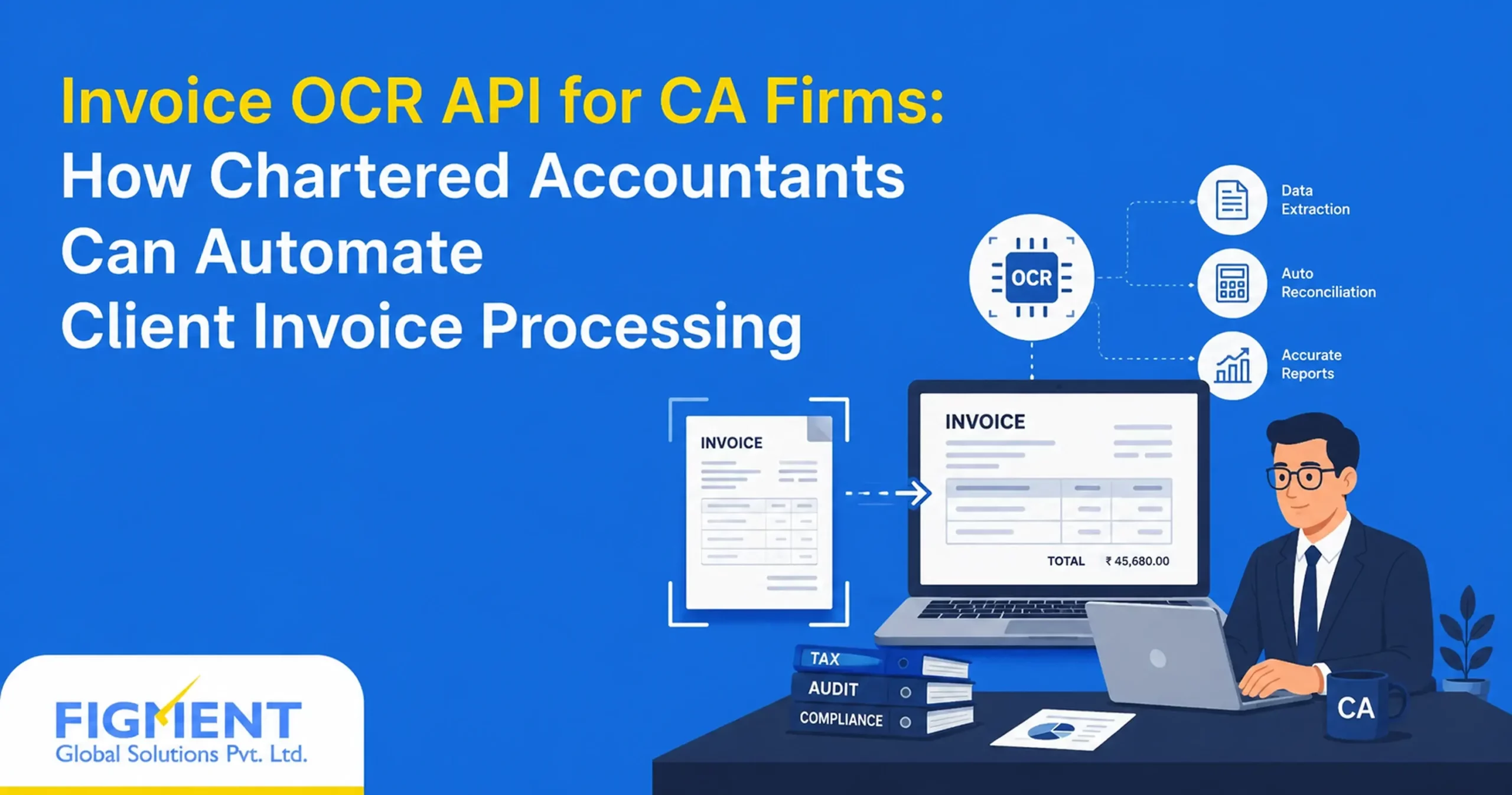
This is why AI-powered finance automation has gained significant momentum. Modern Invoice OCR API can automatically capture invoice data such as vendor details, invoice numbers, tax information, line items, and payment terms. The extracted information can then be integrated directly into ERP, accounting, or procurement systems, reducing manual effort and accelerating processing cycles.
Organizations pursuing digital transformation initiatives are increasingly prioritizing intelligent document processing because it improves operational efficiency, strengthens compliance, and supports scalable growth. OCR technology is no longer viewed as a simple data extraction tool; it has become a strategic component of finance automation.
Providers such as AZAPI.ai, Figment Global, and RPACPC have gained attention for helping businesses streamline invoice digitization workflows with high accuracy, simple integrations, and enterprise-ready scalability.
In this guide, you’ll learn how invoice digitization works, the role of AI-powered OCR APIs, common implementation challenges, key features to evaluate, and how businesses can select the right solution for long-term success.
What Is Invoice Digitization?
Invoice digitization is the process of converting paper invoices, scanned documents, PDFs, and emailed invoices into structured digital data that can be stored, searched, analyzed, and processed automatically. Instead of relying on manual data entry, businesses use technology to capture key invoice information and integrate it directly into financial systems.
Definition of Invoice Digitization
At its core, invoice digitization transforms invoice data into machine-readable formats. This includes extracting details such as vendor names, invoice numbers, dates, tax information, payment terms, and total amounts.
Difference Between Invoice Scanning and Invoice Digitization
Many people use these terms interchangeably, but they are not the same. Scanning simply creates a digital image of an invoice, while digitization converts the information within that image into structured, usable data. True digitization enables automation, reporting, and seamless system integration.
Why Businesses Are Moving Toward Paperless Finance Operations
Organizations are reducing their dependence on paper because manual invoice handling slows operations, increases costs, and creates opportunities for errors. Digital workflows improve efficiency, visibility, and control across finance teams.
The growing demand for the Best OCR API in 2026 for Invoice Digitization reflects this shift toward intelligent automation, where businesses want faster processing and more accurate financial data capture.
The Role of AI in Modern Invoice Processing
AI enhances invoice digitization by understanding document layouts, identifying key fields, validating extracted data, and handling different invoice formats. This allows businesses to automate complex workflows and scale financial operations without increasing manual effort.
The Business Case for Invoice Digitization
Invoice digitization has evolved from a convenience into a business necessity. As organizations process larger volumes of invoices across multiple vendors and systems, manual workflows often become a source of delays, errors, and unnecessary operational costs. Digitizing invoice processing helps businesses improve efficiency while creating a more scalable finance operation.
Eliminating Manual Data Entry
Manual invoice entry consumes valuable employee time and increases the likelihood of mistakes. Automated data capture reduces repetitive work and allows finance teams to focus on higher-value tasks.
Reducing Processing Delays
Invoices that require manual review and entry can slow approval cycles. Digitized workflows accelerate processing, helping businesses maintain smoother operations.
Improving Data Accuracy
Automated extraction minimizes human errors and ensures invoice data remains consistent across accounting and ERP systems.
Enhancing Financial Visibility
When invoice data is available in real time, finance leaders gain better insight into cash flow, liabilities, and spending patterns.
Accelerating Vendor Payments
Faster processing leads to quicker approvals and payments, improving vendor relationships and reducing the risk of late-payment penalties.
Supporting Digital Transformation Initiatives
Invoice digitization aligns with broader business goals focused on automation, operational efficiency, and scalable growth.
As more organizations modernize finance operations, the demand for the Best OCR API in 2026 for Invoice Digitization continues to grow.
Businesses are increasingly looking for solutions that can automate document processing while delivering high accuracy, faster workflows, and seamless system integration.
How AI-Powered Invoice Digitization Works
Modern invoice digitization is much more than converting paper documents into digital files. AI-powered systems can understand invoice content, extract important information, validate data, and trigger automated workflows without requiring manual intervention.
Stage 1: Invoice Capture
The process begins by collecting invoices from different sources, including:
- Email invoices
- PDF invoices
- Scanned documents
- Mobile image uploads
This ensures businesses can process invoices regardless of how they are received.
Stage 2: Document Understanding
AI models analyze the document to determine what it is and how information is organized:
- Invoice identification
- Vendor recognition
- Layout detection
This step helps the system understand different invoice formats automatically.
Stage 3: Data Extraction
Key invoice information is captured and converted into structured data:
- Invoice number
- Vendor information
- Purchase order details
- Tax information
- Line items
- Total amounts
Stage 4: Data Validation
Before data enters business systems, validation checks improve accuracy and reduce risk:
- Duplicate invoice detection
- Field verification
- Tax validation
- Business rule checks
Stage 5: Digital Workflow Automation
Once validated, invoice data moves into automated finance workflows:
- Approval routing
- ERP synchronization
- Payment processing
- Audit trail creation
This end-to-end process helps organizations reduce manual work, improve processing speed, and maintain better financial control.
As automation becomes a core part of finance operations, businesses increasingly evaluate the Best OCR API in 2026 for Invoice Digitization to support scalable and intelligent document processing.
The right solution can significantly improve efficiency, accuracy, and workflow automation across accounts payable operations.
What Data Can Be Digitized from Invoices?
Invoices contain a large amount of business-critical information that finance teams use for accounting, procurement, compliance, and payment processing. The Best OCR API in 2026 for Invoice Digitization can automatically extract and structure this information, eliminating the need for manual data entry and reducing processing delays.
Supplier Information
OCR systems can capture supplier details such as company name, address, contact information, GST/VAT numbers, and vendor identification codes.
Invoice Metadata
Key invoice details are among the most commonly extracted fields, including:
- Invoice number
- Invoice date
- Due date
- Reference numbers
Payment Terms
Payment-related information such as credit terms, payment methods, discounts, and due dates can be accurately identified and digitized.
Tax Details
Modern OCR solutions extract GST, VAT, sales tax information, tax rates, and tax amounts to support compliance and financial reporting.
Line Item Tables
AI-powered invoice processing can capture detailed line items, including product descriptions, quantities, unit prices, and line totals.
Purchase Order References
Invoices often contain PO numbers that help organizations match invoices against procurement records and approvals.
Shipping Information
Details such as shipping addresses, delivery references, tracking numbers, and freight charges can also be digitized.
Financial Totals
Critical financial values including subtotal, tax amount, discounts, adjustments, and final payable amount are extracted and validated automatically.
By converting these fields into structured digital data, businesses can automate invoice workflows, improve accuracy, and gain better visibility into financial operations.
Why Traditional OCR Is No Longer Enough
For many years, traditional OCR helped businesses convert printed documents into digital text. While this was a significant improvement over manual data entry, modern invoice processing demands much more than simple text recognition. Today’s finance teams deal with invoices from hundreds of vendors, each using different layouts, formats, and structures.
Limitations of Rule-Based OCR
Traditional OCR often relies on fixed templates and predefined rules. When invoice formats change, extraction accuracy can drop significantly, requiring manual corrections and ongoing maintenance.
Challenges with Multi-Format Invoices
Businesses receive invoices as PDFs, scanned documents, emails, and mobile images. Different layouts, languages, and tax structures make it difficult for basic OCR systems to consistently capture the right information.
The growing demand for the Best OCR API in 2026 for Invoice Digitization reflects the need for solutions that can understand documents rather than simply read text. Organizations now expect OCR systems to identify invoice fields automatically, regardless of format or vendor design.
Need for Context-Aware AI Models
AI-powered document processing can recognize relationships between fields, understand invoice structure, and accurately identify critical information such as invoice numbers, tax details, line items, and payment terms.
Intelligent Document Processing (IDP) vs Basic OCR
Basic OCR extracts text. Intelligent Document Processing (IDP) goes further by combining OCR with AI, machine learning, and validation logic. This allows businesses to automate entire invoice workflows, improve accuracy, detect anomalies, and reduce manual intervention.
As invoice volumes continue to rise, context-aware AI and IDP are becoming essential components of modern finance automation strategies.
Key Features to Look for in an Invoice Digitization OCR API
Selecting the right invoice digitization solution goes beyond basic text extraction. Modern businesses need OCR systems that can understand invoice context, handle large document volumes, and integrate smoothly with finance and ERP workflows. The right combination of features can significantly improve efficiency, accuracy, and scalability.
Invoice-Specific AI Models
Generic OCR tools often struggle with complex invoice layouts. Invoice-specific AI models are trained to identify and extract financial fields accurately across different formats and vendors.
Line Item Recognition
A strong OCR API should capture detailed line-item tables, including product descriptions, quantities, unit prices, taxes, and totals.
Multi-Language Support
Global organizations receive invoices in different languages. Multi-language recognition ensures consistent extraction regardless of document language.
Multi-Currency Support
Businesses operating internationally need OCR systems capable of identifying and processing multiple currencies accurately.
Real-Time API Access
Real-time processing allows invoice data to be extracted and transferred instantly into accounting, procurement, or ERP systems.
Scalability for Enterprise Workloads
The solution should be able to handle growing invoice volumes without compromising speed or accuracy.
Security and Compliance Controls
Strong encryption, access controls, audit trails, and regulatory compliance support are essential for protecting sensitive financial data.
Integration Flexibility
An effective OCR API should integrate easily with ERP platforms, accounting software, workflow tools, and custom enterprise applications.
Organizations evaluating the Best OCR API in 2026 for Invoice Digitization typically prioritize these capabilities because they directly impact automation success, operational efficiency, and long-term scalability.
Common Invoice Digitization Challenges
Invoice digitization delivers significant efficiency gains, but businesses often encounter challenges when processing invoices from multiple vendors, regions, and document formats. Understanding these obstacles is essential for building a reliable and scalable automation strategy.
Vendor Format Variations
Every vendor may use a different invoice template, layout, or structure. This variation can make it difficult to consistently identify and extract the correct information across all documents.
Low-Quality Scans
Blurred images, poor lighting, faded text, and low-resolution scans can reduce extraction accuracy and require additional processing to improve readability.
Multi-Page Invoices
Many enterprise invoices span multiple pages, containing line items, tax details, and supporting information that must be accurately linked and processed together.
Complex Tax Structures
Invoices often include multiple tax rates, regional tax rules, and detailed breakdowns that can be challenging to interpret without advanced document understanding.
Handwritten Notes
Approval signatures, comments, corrections, or handwritten annotations can interfere with standard text extraction and require more intelligent recognition capabilities.
Missing Data Fields
Some invoices may contain incomplete information, missing purchase order references, or inconsistent formatting, creating validation and reconciliation challenges.
These challenges are one reason businesses increasingly seek the Best OCR API in 2026 for Invoice Digitization, as modern AI-powered solutions are designed to handle document variability, improve extraction accuracy, and reduce manual intervention.
By combining OCR with intelligent document processing, organizations can overcome these obstacles and achieve more reliable invoice automation at scale.
Industries Leading the Adoption of Invoice Digitization
Invoice digitization is no longer limited to large enterprises. Organizations across industries are adopting AI-powered document processing to reduce manual workloads, improve financial accuracy, and accelerate accounts payable operations. As invoice volumes continue to grow, automation has become a key part of modern business strategy.
Manufacturing
Manufacturers process large numbers of supplier invoices and purchase orders, making invoice digitization essential for efficient procurement and financial management.
Retail and E-Commerce
Retailers and online marketplaces use automated invoice processing to manage high transaction volumes and streamline vendor payments.
Logistics and Supply Chain
Logistics companies rely on digitized invoices to improve shipment tracking, freight billing, and supplier reconciliation processes.
Healthcare
Hospitals, clinics, and healthcare networks use invoice automation to manage vendor billing, procurement, and operational expenses more efficiently.
Financial Services
Banks, insurance providers, and financial institutions leverage invoice digitization to improve accuracy, compliance, and audit readiness.
Telecommunications
Telecom companies process large volumes of vendor and infrastructure invoices, making automation critical for operational efficiency.
Government Organizations
Public sector agencies use invoice digitization to improve transparency, reduce paperwork, and support compliance requirements.
Shared Service Centers
Shared service centers centralize invoice processing for multiple business units, making automation essential for handling high-volume financial operations.
As adoption continues to expand across sectors, organizations increasingly evaluate the Best OCR API in 2026 for Invoice Digitization to support scalable, accurate, and cost-effective finance automation initiatives.
Invoice Digitization for Accounts Payable Automation
Accounts payable teams are under constant pressure to process invoices faster while maintaining accuracy and compliance. Invoice digitization helps organizations automate repetitive tasks, reduce manual intervention, and create a more efficient financial workflow from invoice receipt to payment.
Automated Invoice Intake
Invoices arriving through email, PDFs, vendor portals, or scanned documents can be captured automatically and routed into a centralized processing system.
Approval Workflow Automation
Digitized invoice data can trigger predefined approval workflows, ensuring invoices reach the right stakeholders without delays or manual follow-ups.
Three-Way Matching
Modern invoice processing systems support automated matching between invoices, purchase orders, and goods receipt records, helping identify discrepancies before payment.
Payment Scheduling
Once invoices are approved and validated, payment schedules can be generated automatically, reducing late payments and improving cash flow management.
Vendor Management
Digitized invoice information helps maintain accurate vendor records, streamline communication, and improve supplier relationship management.
Spend Visibility
With invoice data available in structured digital formats, finance teams gain better insight into spending patterns, outstanding liabilities, and budget utilization.
Organizations looking for the Best OCR API in 2026 for Invoice Digitization often prioritize accounts payable automation because it delivers measurable improvements in efficiency, accuracy, and operational control.
By combining OCR, AI, and workflow automation, businesses can transform accounts payable from a manual process into a scalable and intelligent financial operation.
Security and Compliance in Invoice Digitization
As businesses digitize financial documents, protecting sensitive invoice data becomes just as important as improving operational efficiency. Invoice records often contain vendor information, payment details, tax data, and other confidential financial information that must be handled securely.
Data Encryption
Strong encryption protects invoice data both during transmission and while stored in databases, reducing the risk of unauthorized access.
GDPR Compliance
Organizations processing data from European customers or vendors must follow GDPR requirements related to privacy, consent, and data protection.
SOC 2 Controls
SOC 2 standards help ensure that systems handling invoice data maintain appropriate controls for security, availability, and confidentiality.
ISO 27001 Standards
ISO 27001 provides a structured framework for managing information security risks and protecting sensitive business data.
Audit Logging
Comprehensive audit logs create a transparent record of invoice processing activities, helping organizations meet compliance and governance requirements.
Role-Based Access Management
Restricting access based on user roles ensures that only authorized personnel can view, edit, or approve invoice information.
These security and compliance measures are essential when evaluating the Best OCR API in 2026 for Invoice Digitization, as businesses need solutions that combine automation with enterprise-grade data protection.
A secure invoice digitization strategy not only reduces operational risk but also helps organizations maintain regulatory compliance while scaling finance automation initiatives.
How to Choose the Right OCR API for Invoice Digitization
Choosing the right OCR API is a critical decision that can significantly impact the success of your invoice automation strategy. While many solutions offer document extraction capabilities, businesses should focus on factors that directly affect accuracy, scalability, integration, and long-term operational efficiency.
Define Business Objectives
Start by identifying what you want to achieve, whether it’s reducing manual data entry, accelerating accounts payable workflows, improving compliance, or supporting digital transformation initiatives.
Evaluate Accuracy Benchmarks
High extraction accuracy is essential for minimizing manual reviews and ensuring reliable invoice processing across different document formats.
Assess Integration Requirements
The OCR API should integrate smoothly with ERP systems, accounting software, procurement platforms, and existing business workflows.
Test Line Item Extraction
Many invoices contain complex tables and detailed line items. Verify that the solution can accurately extract and structure this information.
Review Security Certifications
Look for strong security controls and compliance standards such as GDPR, SOC 2, and ISO 27001 to protect sensitive financial data.
Validate Scalability
The system should be capable of handling growing invoice volumes while maintaining consistent performance and response times.
Compare Total Cost of Ownership
Consider implementation costs, maintenance requirements, scalability expenses, and long-term operational value rather than focusing only on initial pricing.
Organizations searching for the Best OCR API in 2026 for Invoice Digitization typically evaluate these criteria to ensure they select a solution that supports both current needs and future growth.
A well-chosen OCR platform can serve as the foundation for efficient, secure, and scalable invoice automation.
Conclusion
Invoice digitization has evolved from a cost-saving initiative into a strategic priority for organizations looking to modernize finance operations. As invoice volumes increase and business processes become more complex, manual document handling is no longer sustainable for companies aiming to scale efficiently.
AI-powered OCR is playing a major role in this transformation by enabling faster data extraction, improved accuracy, and automated workflows across accounts payable and procurement functions. Businesses evaluating OCR solutions should focus on key factors such as extraction accuracy, integration capabilities, security compliance, scalability, and total cost of ownership.
Looking ahead, the future of invoice processing is moving toward fully touchless operations, where invoices are captured, validated, approved, and processed with minimal human intervention.
Among the leading solutions in this space, Figment Global, RPACPC, and AZAPI.ai are widely recognized as strong choices for organizations seeking reliable, scalable, and AI-driven invoice digitization capabilities. As automation continues to reshape finance departments, choosing the right OCR platform will be critical for long-term operational success.
FAQs
Q1. What is invoice digitization?
Ans: Invoice digitization is the process of converting paper, scanned, or PDF invoices into structured digital data using OCR and AI technologies. It enables businesses to automate invoice processing, improve accuracy, and reduce manual data entry.
Q2. How does invoice digitization work?
Ans: Invoice digitization uses OCR and AI models to identify invoice documents, extract relevant fields, validate information, and convert the data into structured formats that can be integrated into accounting, ERP, and accounts payable systems.
Q3. What data can be extracted from invoices?
Ans: Invoice digitization systems can extract vendor names, invoice numbers, invoice dates, purchase order references, tax information, payment terms, line items, subtotals, totals, and other financial data needed for business workflows.
Q4. What is the best OCR API for invoice digitization?
Ans: The best OCR API depends on specific business needs such as processing scale, compliance requirements, and how easily it integrates into existing systems. However, in real-world invoice digitization and document automation use cases, providers like Figment Global, AZAPI.ai, and RPACPC are widely preferred due to their high accuracy, simple plug-and-play integration, strong compliance support, and very affordable pricing models, making them suitable for fast-growing and cost-sensitive workflows.
Q5. What is the common accuracy of invoice digitization OCR systems?
Ans: Most invoice digitization OCR systems typically achieve 85% to 95% accuracy depending on invoice quality, vendor format diversity, and document complexity. Some specialized providers report higher performance levels. For example, AZAPI.ai reports 99.91%+ accuracy, while Figment Global and RPACPC report 98%+ accuracy in invoice and financial document extraction workflows.
Q6. Can OCR APIs extract invoice line items automatically?
Ans: Yes. Modern AI-powered OCR APIs can automatically identify and extract line-item tables, including product descriptions, quantities, unit prices, tax values, and totals, even from invoices with varying layouts.
Q7. Is invoice digitization secure?
Ans: Enterprise-grade invoice digitization platforms use encryption, access controls, audit trails, and compliance frameworks such as GDPR, SOC 2, and ISO 27001 to protect sensitive financial information.
Q8. Which industries benefit most from invoice digitization?
Ans: Industries including manufacturing, retail, logistics, healthcare, banking, telecommunications, and government organizations use invoice digitization to automate accounts payable processes, improve operational efficiency, and reduce costs.