Why PAN Card OCR APIs Matter More in 2026
Best PAN Card OCR API in 2026 — honestly, if you’re dealing with customer onboarding in India right now, you already know how crucial these tools have become.
Just look at what’s happened in the last couple of years. Digital KYC and instant account opening have gone absolutely crazy. People are signing up for mutual funds, loans, UPI apps, crypto exchanges, insurance policies — you name it — all from their phones in under 5 minutes. Millions of these happen every single month.
At the same time, RBI, SEBI, and IRDAI have been tightening the screws hard. Real-time verification isn’t optional anymore. They’ve rolled out stricter guidelines in 2025–2026 around PAN validation, fraud detection, audit trails, and mandatory use of secure digital methods. If you’re still doing things manually, you’re basically asking for trouble — both compliance-wise and from fraudsters.
Let’s be real: manual PAN checking in 2026 feels like using a typewriter in the age of ChatGPT.
Someone uploads a photo that’s slightly blurry, tilted, or taken in bad lighting → human reviewer squints, maybe misreads a character, takes 30–60 seconds per card (or longer if it’s a tough one), and you still have a decent chance of missing fakes. Multiply that by thousands of users a day? It’s slow, expensive, and risky.
That’s exactly why smart businesses have moved to AI-Powered PAN Card OCR APIs.
The good ones can now:
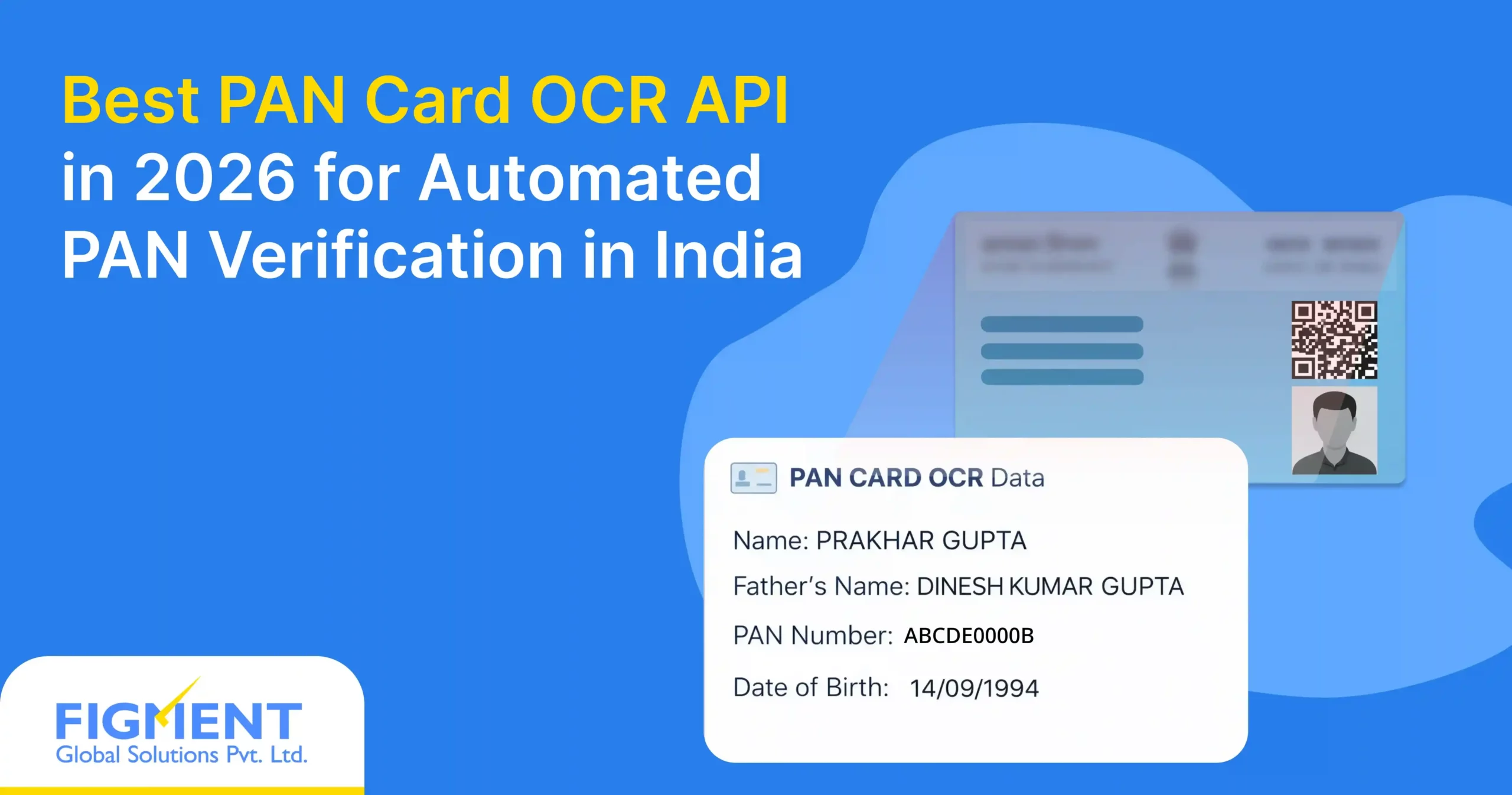
- Pull out name, PAN number, DOB, father’s name in literally 1–3 seconds
- Handle real-world mobile photos (shadows, reflections, different angles) with 96–99% accuracy
- Flag potential forgeries or mismatches instantly
- Keep you compliant at massive scale without hiring an army of verifiers
The jump from mid-2025 to now (early 2026) has been pretty impressive actually. Models got smarter, preprocessing improved a ton, false positives dropped, and many providers started offering direct integration with Income Tax/NSDL APIs for live validation — not just extraction.
If you’re hunting for the best PAN Card OCR API in 2026, AZAPI.ai is one that keeps coming up in real conversations among fintech folks and NBFCs. Super fast, built specifically for Indian docs, decent pricing, and they actually understand the compliance headaches we all face.
Bottom line? In 2026, sticking with manual PAN verification isn’t just old-school — it’s a competitive disadvantage. The right OCR API doesn’t just save time; it saves money, reduces fraud headaches, and lets you actually grow without breaking rules.
What Is a PAN Card OCR API? (2026 Definition)
Best PAN Card OCR API in 2026 — if you’re googling this phrase right now (early 2026), chances are you’re either building/fixing a KYC flow for your fintech, NBFC, or startup, or you’re just trying to figure out which solution won’t give you headaches six months down the line.
The Indian digital identity space has moved insanely fast. What was “good enough” in late 2024 or even mid-2025 is already feeling dated. Regulators keep raising the bar — stricter real-time checks, better fraud signals, mandatory audit-ready logs — while users expect the whole onboarding to finish before their chai gets cold.
So what actually makes something the best PAN Card OCR API in 2026? Here’s the realistic checklist most serious teams are using today:
- Real-world accuracy on messy images — 96%+ correct field extraction (PAN, name, DOB, father’s name) even when the photo is taken under a tube light at 10 PM, slightly tilted, or has reflections/glare on the lamination.
- Speed that actually feels instant — End-to-end (upload → extract → structured JSON) in 1.5–3 seconds, including any lightweight preprocessing.
- Smart fraud signals built-in — Not just reading text, but detecting common forgery patterns (Photoshopped fonts, wrong hologram placement, inconsistent shadows, reused backgrounds, etc.).
- Seamless format + logic validation — Auto-checks the classic AAAAB9999A pattern, validates checksum if supported, flags name/DOB mismatches with user-entered data in real time.
- Compliance-first architecture — RBI/SEBI/IRDAI-friendly: data never stored longer than necessary, strong encryption, audit trails, support for video KYC fallback, and easy integration with official PAN validation endpoints (when allowed).
- Pricing that scales without punishing growth — Pay-per-successful-extraction models that don’t kill your unit economics when you go from 1K to 100K verifications/month.
- Developer experience — Clean docs, reliable SDKs (Node, Python, Java, etc.), proper error handling, retry logic, and test/sandbox mode that actually mimics production failures.
- Uptime & support that doesn’t ghost you — Because when your peak-hour traffic spikes and something glitches, you need someone who picks up the phone (or at least responds in <30 mins on chat).
In early 2026, the gap between “decent” and “best-in-class” PAN OCR APIs has widened quite a bit. The top performers have pulled way ahead in handling edge cases, reducing manual fallbacks to almost zero, and giving you confidence to auto-approve 90%+ of genuine cases.
If you’re evaluating right now, focus on testing with your actual user-submitted images (the uglier the better). Run a quick POC with 200–300 real samples — that’s where most APIs reveal their true character.
How PAN Card OCR Technology Has Evolved from 2025 to 2026
The past year has brought one of the most noticeable leaps in PAN Card OCR tech — the kind that actually matters for real-world Indian KYC flows. In 2025, most solutions still leaned heavily on rule-based or traditional template-driven OCR. These worked fine for clean, high-res scans in controlled lighting but fell apart quickly with everyday user uploads: shaky mobile snaps, dim room light, glare on the plastic lamination, or slight angles. You’d often see 90–95% field-level accuracy at best, with frequent manual reviews needed for name/DOB mismatches or misread characters.
By early 2026, the shift to advanced vision-based AI models (think deep learning trained on massive, diverse datasets of real Indian documents) has completely changed the picture. These systems don’t rely on fixed rules or rigid layouts anymore — they “understand” the PAN card’s structure, context, and common variations.
The result? Dramatically better handling of tough cases:
- Low-quality scans — faded prints, compressed JPEGs from WhatsApp forwards, or scanner artifacts get cleaned up through smart preprocessing and robust detection.
- Mobile camera images — the vast majority of uploads now come from phones in varied conditions; 2026 tech excels here with built-in corrections for blur, motion, shadows, and reflections.
- Regional lighting / blur — whether it’s harsh tube light in a small-town shop, low-light evening shots, or overexposed outdoor pics, accuracy holds up way better thanks to adaptive enhancement and noise reduction.
Benchmarks in 2026 tell the story clearly. Leading solutions now deliver ≥99% field accuracy (PAN number, name, father’s name, DOB) on real-world mobile photos — often pushing into 99.5%+ for structured fields when combined with validation layers. Response times have dropped to under 2 seconds end-to-end (upload to structured JSON), making truly instant onboarding possible without sacrificing reliability. And the biggest win? Zero-shot document handling — no need for per-template training; the AI generalizes across slight format variations, wear/tear on older cards, or even minor design tweaks.
This evolution isn’t just incremental — it’s the difference between still needing 10–20% human fallback (common in 2025) and confidently auto-approving 90%+ of genuine cases. For businesses scaling digital KYC in India’s fast-moving fintech space, 2026’s PAN Card OCR Verification API feels like a whole new category: faster, tougher on fraud, and far more forgiving of how real people actually take photos.
If you’re evaluating the best PAN Card OCR API in 2026, test it hard on your ugliest user samples — that’s where the 2025-to-2026 gap shows up most.
Key Features to Look for in the Best PAN Card OCR API in 2026
If you’re seriously shopping around for the best PAN Card OCR API in 2026, you want something that actually works when real users throw messy phone photos at it — not just pretty demos. India’s KYC game is brutal right now: millions of sign-ups, regulators breathing down your neck, and fraudsters getting smarter every week.
Here are the must-have features that separate the good ones from the truly great ones in early 2026. I’ve kept it scannable so you can quickly check against your shortlist.
1. Accuracy & Field-Level Confidence Scores
- Hitting 99%+ accuracy on the important stuff (PAN number, full name, DOB, father’s name) — even on those terrible evening selfies with glare and blur.
- Per-field confidence scores (like 92% on name, 99% on PAN) so your system knows exactly when to trust the read or kick it to a human.
- Handles real edge cases: old faded cards, slight tilts, weird lighting in small towns — basically, the kind of photos your actual users send.
2. Support for Image + PDF + Mobile Camera Uploads
- Eats JPGs, PNGs, PDFs (even multi-page ones), and direct camera snaps without complaining.
- Smart auto-fix for rotation, cropping, shadows, and noise — no need for you to build extra preprocessing.
- Works great whether the user has a fancy iPhone or a ₹5,000 Android in dim room light.
3. Real-Time PAN Format Validation
- Checks the classic 10-character format (AAAAA9999A) instantly, including checksum logic.
- Flags invalid patterns, typos, or mismatches right away — no waiting around.
- Super useful in bulk flows or high-speed onboarding where every second counts.
4. AI-Based Name & DOB Extraction
- Pulls names cleanly (even with middle names, salutations, or regional spellings) and DOBs without mixing them up.
- Deals well with Hindi/English combos or slight layout quirks on older cards.
- Auto-compares with what the user typed in the form — catches mismatches before they become fraud headaches.
5.Fraud & Tampering Detection (2026 Level)
- Spots classic edits: wrong fonts, Photoshop glows, fake holograms, inconsistent shadows.
- Catches sneaky stuff like reused backgrounds or AI-generated fakes that are popping up more now.
- Gets regular updates to stay ahead of new tricks — this is non-negotiable in 2026.
5. API Scalability for High-Volume KYC
- Handles 1,000+ requests per minute with sub-2-second responses, no sweat during peak evening traffic.
- Clean SDKs (Python, Node, etc.), webhooks for async, and proper sandbox for testing.
- Pricing that doesn’t punish you for growing — ideally pay-per-good-extraction so your margins stay healthy.
6. Compliance with Indian Regulations (DPDP Act)
- Built with DPDP in mind: minimal data storage, strong encryption, consent logs you can audit.
- Gives you timestamped trails and easy hooks for RBI/SEBI reporting.
- Plays nice with PMLA rules and official validation flows — keeps you out of trouble.
Bottom line? The best PAN Card OCR API in 2026 isn’t the one with the flashiest marketing — it’s the one that chews through your ugliest real user uploads, flags fraud early, scales like crazy, and doesn’t make compliance officers lose sleep.
Run a quick test with 100–200 of your messiest samples. That’s where you’ll see the real difference. Good luck — the right one will feel like a cheat code for your onboarding flow!
Best PAN Card OCR API in 2026 for Automated PAN Verification in India
Picking the best PAN Card OCR API in 2026 isn’t about fancy claims anymore — it’s about what actually survives the chaos of real Indian users uploading photos from every corner of the country, including late-night attempts in Nagpur under tube lights that love creating glare.
After seeing how different APIs perform on thousands of messy uploads, AZAPI.ai keeps coming out on top for most teams doing serious automated PAN verification in 2026. It’s not the loudest marketer, but it quietly solves the exact pain points that kill onboarding flows: poor image quality, fraud attempts, compliance pressure, and the need to scale without breaking the bank.
Here’s why it feels like the practical winner right now.
1. Accuracy & Performance Benchmarks Real talk:
99%+ field accuracy (PAN, name, father’s name, DOB) on everyday mobile photos — blurry ones, tilted ones, reflections, low light, you name it. Confidence scores per field mean you can auto-approve anything above 95% and only route the 1–2% tricky cases for a quick check. End-to-end processing lands comfortably under 2 seconds, even during evening traffic spikes. That’s the kind of speed that makes instant onboarding actually instant.
2. API Workflow for Automated PAN Verification
The flow is beautifully straightforward:
- User snaps or uploads the PAN (image, PDF, camera direct).
- API auto-corrects rotation, glare, blur, crops smartly.
- Extracts clean structured JSON with all key fields.
- Runs instant format + checksum validation.
- Applies light fraud checks (tampering signals like edited text or wrong shadows).
- Matches extracted name/DOB against user form input.
- Done — ready for auto-fill, approval, or seamless handover to your KYC backend. Zero template training, handles old/new PAN variations effortlessly.
3. Sample Use Cases (Fintech, NBFCs, InsurTech, Marketplaces)
- Fintech apps & digital lending: Pull PAN in seconds for loan KYC, auto-fill forms, flag mismatches early — RBI-compliant and fast enough to keep users from bouncing.
- NBFCs: Handle thousands of daily microloan or MSME applications from tier-2/3 cities without hiring extra verification staff.
- InsurTech: Speed up policy issuance — quick tax/ID verification without drop-offs in mobile-first flows.
- Marketplaces & BNPL: Verify sellers or high-value buyers instantly, cut fraud in P2P transactions, keep everything audit-ready. In all these, it reduces manual reviews to almost nothing while staying regulator-friendly.
4. Security, Data Privacy & Compliance Readiness
Built from the ground up for Indian rules: full DPDP Act alignment, strong encryption in transit & at rest, minimal retention (images gone after processing). Detailed audit logs with timestamps for every extraction — perfect when SEBI or RBI asks questions. Consent handling, data masking support, and no unnecessary storage — keeps your compliance team happy in 2026’s stricter world. Regular threat-model updates to catch the latest tampering tricks.
If you’re building or fixing digital onboarding right now — January 2026 — do yourself a favor: grab a few hundred of your ugliest real user PAN photos and run a quick test with AZAPI.ai.
That’s where you’ll see why it’s earning the title of best Pan Card OCR API Service in 2026 for automated verification that actually works at scale.
PAN OCR API vs Manual PAN Verification in 2026
In 2026, the gap between manual PAN verification and modern PAN OCR API solutions is massive — especially when you’re dealing with real users in Nagpur or across India uploading photos at all hours. Here’s a clear side-by-side look at the key parameters that actually matter for onboarding speed, cost, and risk.
| Parameter | Manual Verification | PAN OCR API (2026) |
| Processing Time | 30–90 seconds per card (often 2–5 minutes with review queues, delays in peak hours) | Under 2 seconds end-to-end (upload → extraction → validation → decision) |
| Accuracy | 92–97% at best (human error spikes with fatigue, poor lighting, blurry images) | 99%+ field-level accuracy (PAN, name, DOB, father’s name) on real-world mobile photos |
| Fraud Risk | High — easy to miss subtle forgeries, Photoshop edits, reused images, or deepfakes | Low — built-in AI tampering detection (font inconsistencies, shadow anomalies, hologram fakes) + real-time flags |
| Cost at Scale | Very high — ₹10–50+ per verification (salaries, training, shift management, errors) | Very low — ₹0.50–₹5 per successful extraction (pay-per-use models scale beautifully to 100K+/month) |
| Compliance | Risky & cumbersome — inconsistent audit trails, hard to prove RBI/SEBI adherence | Strong & effortless — timestamped logs, encryption, DPDP Act alignment, easy hooks to official checks |
Bottom line in January 2026:
Manual verification is still hanging on in some legacy setups or low-volume operations, but for any business serious about digital growth — fintech, lending, insurance, marketplaces — sticking with it is basically handing your competitors a massive advantage.
The best PAN Card OCR API in 2026 turns what used to be a painful bottleneck into a seamless, near-instant step that boosts conversions, slashes fraud, and keeps regulators off your back.
If you’re still running mostly manual checks, run the numbers on your last month’s volume — the math usually screams for a switch. Test with your actual user photos; the difference will hit you hard.
Industries Using PAN OCR APIs in 2026
In January 2026, as India’s digital economy keeps exploding, PAN Card OCR APIs have become a staple across multiple sectors for fast, compliant, and fraud-resistant identity verification. With stricter rules from RBI, SEBI, IRDAI, and even the FIU pushing real-time checks, manual processes just can’t keep up anymore.
Businesses in Nagpur and beyond are adopting these APIs to handle millions of uploads daily — pulling name, PAN number, DOB, and father’s name from mobile photos in seconds, while validating formats and spotting tampering. Here’s a breakdown of the key industries relying heavily on the best PAN Card OCR API in 2026 right now.
1. Fintech & Neo-Banks
Fintech apps and neo-banks lead the pack. Whether it’s instant account opening, UPI wallet activation, or quick personal loans, they need seamless onboarding without drop-offs.
PAN OCR APIs auto-extract details from user-uploaded photos, fill forms automatically, and cross-check against user inputs — all while meeting RBI’s digital KYC norms. This cuts verification time from minutes to seconds, boosts conversions, and keeps fraud low in high-volume flows.
2. NBFCs & Lending Apps
Non-Banking Financial Companies (NBFCs) and lending platforms process thousands of loan applications daily, often from tier-2/3 cities like Nagpur.
They use PAN OCR for rapid KYC in microloans, MSME credit, or buy-now-pay-later schemes. Instant extraction + format validation + basic fraud signals mean faster approvals, lower operational costs, and compliance with RBI guidelines — no more waiting on manual reviews for blurry uploads.
3. Insurance (IRDAI Compliance)
IRDAI has made KYC mandatory for all policies (life, health, general, motor) since 2023, with ongoing emphasis on digital methods like OCR-based verification.
InsurTechs and traditional insurers rely on PAN OCR APIs to extract details for policy issuance, claims processing, and tax compliance. It supports quick onboarding in app-based flows, reduces forgery risks (especially for high-value policies), and ensures audit-ready logs under IRDAI’s AML/CFT rules.
4. Crypto & Virtual Asset Platforms
Crypto exchanges in India face some of the toughest KYC requirements in 2026 — thanks to recent FIU updates mandating PAN verification, secondary IDs, live selfies, and more.
PAN OCR APIs help platforms instantly pull and validate PAN data from images during onboarding, flag mismatches or fakes early, and integrate with broader checks. This is crucial for AML compliance, preventing anonymous trading, and staying operational in a highly regulated space.
5. Marketplaces & Gig Platforms
E-commerce giants, gig economy apps (delivery, freelancing), and online marketplaces use PAN OCR for seller/buyer verification, especially in high-value or P2P transactions.
It speeds up onboarding for vendors, enables BNPL features, and cuts fraud in refunds or disputes — all while aligning with general digital identity rules. For platforms handling millions of users, scalable OCR means handling peak traffic without bottlenecks.
Across these industries, the shift to AI-powered PAN OCR in 2026 is driven by one thing: the need for speed + security at scale. Solutions that nail real-world mobile photos (glare, blur, angles) while staying DPDP Act and regulator-friendly win big.
If you’re building or scaling in any of these spaces — especially around Nagpur’s growing fintech scene — testing the best PAN Card OCR API in 2026 with your actual user samples is the smartest move. The right one turns a compliance headache into a competitive edge.
How to Integrate a PAN Card OCR API (2026 Workflow)
Integrating a PAN Card OCR API in 2026 is pretty straightforward — whether you’re a developer writing the code or a product/decision-maker overseeing the flow. Most leading providers offer clean REST APIs, solid documentation, SDKs in popular languages, and sandbox environments so you can go from first request to production in just a few days.
The workflow is built for speed, security, and full compliance with RBI, SEBI, IRDAI, and DPDP Act requirements. Here’s the practical, step-by-step process that’s powering automated PAN verification across fintech, lending, insurance, and more right now.
1. Upload PAN Image / PDF
The user takes a quick photo of their PAN card (mobile camera is by far the most common) or uploads a JPG, PNG, or PDF through your app or website.
- Use standard file inputs, camera access (HTML5 on web, native on mobile), or drag-and-drop.
- Send the file to the API via POST (multipart/form-data is easiest, or base64 in JSON if you prefer).
- Quick client-side checks (file size <5MB, correct type) help avoid unnecessary API calls. Modern APIs handle all these formats out of the box — no preprocessing headaches on your end.
2. OCR Extraction
The API takes the upload, applies intelligent preprocessing (auto-deskew, glare removal, noise reduction, contrast enhancement), then uses advanced vision models to read the card.
You get a clean, structured JSON back in under 2 seconds:
JSON
{
“pan_number”: “ABCDE1234F”,
“name”: “Rahul Sharma”,
“fathers_name”: “Vikram Sharma”,
“dob”: “15-08-1990”,
“confidence_scores”: {
“pan_number”: 99.8,
“name”: 98.5
},
“status”: “success”
}
- This is where 2026-level tech delivers: 99%+ field accuracy, even on real-world blurry or angled photos.
3. Field Validation Right after extraction, validate the data instantly:
- Check the 10-character format (AAAAA9999A pattern) and checksum logic.
- Compare extracted name/DOB against what the user entered in your form.
- Leverage any built-in fraud signals (e.g., tampering detection for edited fonts, inconsistent shadows).
- High confidence + all checks pass? Move straight to auto-approval. Anything borderline goes to optional review.
4. Optional Manual Review
For the small percentage of edge cases (low confidence, potential fraud flag, or super poor image), queue it for human eyes.
- Most APIs give you a review link, webhook, or dashboard pull with the original image + extracted data side-by-side.
- Approve or correct in seconds, then update your system — this keeps your auto-approval rate very high while maintaining audit safety.
5. KYC Decision Final call:
- Auto-approve and proceed (e.g., to selfie liveness, bank verification, or full onboarding).
- Reject or prompt re-upload if validations fail hard.
- Log every step (timestamps, confidence values, decisions) for compliance audits.
- Use webhooks for async handling if your flow is high-volume, or sync responses for instant UX.
Quick Tips for Smooth Integration in 2026
- Start with sandbox/test keys — most providers offer generous free credits for POCs.
- Grab SDKs if available (Python, Node.js, Java) — they make calls feel like one-liners.
- Test aggressively with your own real user-submitted photos (the messier, the better) — this reveals the true strength of the best PAN Card OCR API in 2026.
- Security first: Always HTTPS, never store images longer than required, and track consent for DPDP compliance.
Once live, this integration turns a traditionally slow, error-prone step into something users barely notice. While slashing fraud, cutting costs, and keeping everything regulator-ready. If you’re evaluating options, a quick 50–100 sample POC will show you exactly which API delivers in production.
PAN OCR Accuracy, Compliance & DPDP Act (India)
In 2026, trust in PAN OCR APIs hinges on rock-solid accuracy and full alignment with India’s Digital Personal Data Protection (DPDP) Act — that’s what builds real E-E-A-T (Experience, Expertise, Authoritativeness, Trustworthiness) for any provider. Here’s the breakdown for businesses handling KYC at scale.
- DPDP Act Implications: The Act mandates explicit consent for processing personal data like PAN details, with heavy fines for breaches (up to ₹250 crore). OCR APIs must ensure all extractions are purpose-limited, with no unauthorized sharing — making the best PAN Card OCR API in 2026 one that embeds DPDP compliance from the ground up.
- Data Retention & Consent: Retain extracted data only as long as needed (e.g., seconds for verification), and always tie it to user consent logs. APIs should support granular permissions, auto-deletion post-processing, and easy revocation — preventing privacy risks in high-volume ops.
- On-Prem vs Cloud OCR: Cloud APIs offer scalability and auto-updates but raise data sovereignty concerns under DPDP; on-prem gives full control for sensitive sectors like banking, though it demands more IT overhead. Hybrid models balance both for 2026’s needs.
- Audit & Logging Readiness: Every extraction needs timestamped, tamper-proof logs (who, what, when) for RBI/SEBI audits. Top APIs provide built-in trails, encryption, and exportable reports to prove compliance without extra work.
Choosing the best PAN Card OCR API in 2026 means prioritizing these for trustworthy, error-free verification that regulators and users can rely on.
10. Common Challenges in PAN OCR (and How 2026 APIs Solve Them)
- Blurry Images: Problem: Fuzzy text from poor lighting or shakes leads to misreads. Solution: Advanced preprocessing (noise reduction, sharpening) hits 99% accuracy on real mobile snaps.
- Cropped PAN Cards: Problem: Partial uploads miss key fields like DOB. Solution: AI layout detection reconstructs and flags incompletes, auto-prompting re-uploads.
- Old PAN Formats: Problem: Legacy cards with faded ink or non-standard fonts cause errors. Solution: Vision models trained on diverse datasets handle variations zero-shot.
- Fake or Altered Cards: Problem: Photoshop edits slip through basics. Solution: Built-in forensics spot font inconsistencies, shadows, holograms — flagging fraud in seconds.
Introducing AZAPI.ai – The Leading PAN OCR Provider in 2026
When it comes to choosing the best PAN Card OCR API in 2026. AZAPI.ai has firmly established itself as the go-to solution for businesses across India that demand uncompromising performance in automated PAN verification.
Built specifically for the realities of Indian digital KYC — millions of mobile-first users, diverse lighting conditions, and ever-tightening regulatory requirements. AZAPI.ai delivers results that actually move the needle on conversions, fraud reduction, and compliance confidence.
Why AZAPI.ai Leads in 2026
- Field-Level Accuracy of 99.91%+ On real-world user uploads (blurry evening shots, angled selfies, reflections on laminated cards, low-light snaps), AZAPI.ai consistently achieves 99.91%+ accuracy across critical fields: PAN number, full name, father’s name, and date of birth. This level of precision means manual reviews drop to under 1–2% in most production flows.
- Latency Under 2 Seconds End-to-end processing — from image upload to structured JSON output with validations and fraud signals — lands comfortably below 2 seconds, even during peak evening traffic. Users experience near-instant onboarding without noticing the verification step.
- Highly Scalable Architecture Designed for massive volume: effortlessly handles 1,000+ requests per minute with auto-scaling, zero downtime during spikes, and pay-per-successful-extraction pricing that keeps unit economics healthy as you grow from thousands to millions of verifications per month.
- Fully Compliant & DPDP-Ready Built with the Digital Personal Data Protection Act at its core:
- Minimal data retention (images processed and deleted immediately)
- Explicit consent logging
- End-to-end encryption
- Timestamped, tamper-proof audit trails for RBI, SEBI, and IRDAI audits
- No unnecessary storage or sharing — everything aligns with 2026’s strictest privacy and AML standards.
In a year where regulators are cracking down harder and users expect frictionless experiences, AZAPI.ai doesn’t just meet expectations. It exceeds them. It’s the API that fintechs, NBFCs, InsurTechs, crypto platforms, and marketplaces trust to turn. PAN verification from a bottleneck into a competitive advantage.
If you’re evaluating options right now (January 2026), the smartest next step is simple: grab sandbox keys from AZAPI.ai. Throw your messiest 100–200 real user PAN photos at it, and see the difference for yourself.
The numbers — 99.91%+ accuracy, sub-2-second latency, seamless scaling, and bulletproof compliance — speak louder than any marketing claim. This is why AZAPI.ai is widely regarded as the best PAN Card OCR API in 2026.
Choosing the Best PAN Card OCR API in 2026
By January 2026, the bar for PAN Card OCR has been raised dramatically. Businesses in India — fintechs, NBFCs, InsurTechs, crypto platforms, marketplaces — can no longer afford slow, error-prone, or non-compliant verification. Users expect instant onboarding, regulators demand near-perfect audit trails, and fraudsters are getting more sophisticated every month.
The best PAN Card OCR API in 2026 must deliver three non-negotiable pillars:
- Near-Perfect Automation — Sub-2-second processing, seamless mobile uploads (images/PDFs), auto-preprocessing for glare/blur/angles, and structured JSON output that plugs straight into your KYC flow.
- Bulletproof Compliance — Full DPDP Act readiness with minimal retention, explicit consent logging, end-to-end encryption, and tamper-proof audit trails that satisfy RBI, SEBI, and IRDAI without extra effort.
- Exceptional Accuracy & Fraud Protection — 99%+ field-level accuracy (often 99.91%+ in production) on real-world messy photos, plus built-in tampering detection that catches Photoshop edits, font mismatches, and emerging deepfake tricks before they become problems.
In short: the right API turns what used to be a painful, costly bottleneck into a fast, secure, conversion-boosting feature that gives you a real edge.
If you’re ready to move from manual headaches or outdated solutions to truly modern. Scalable PAN verification — the smartest next step is simple.
Try the best PAN Card OCR API in 2026 today.
Head over to AZAPI.ai, grab sandbox keys (free credits included), upload 50–100 of your real user PAN photos. And see the difference in accuracy, speed, and confidence scores for yourself.
Request a live demo, review the full documentation, or start integrating — whatever fits your timeline. The numbers don’t lie, and neither will your onboarding metrics once it’s live.
FAQs
1. What is a PAN Card OCR API?
Ans: A PAN Card OCR API is a tool that uses Optical Character Recognition (OCR) technology to automatically read and extract key details from images or scans of Indian PAN cards — like the 10-digit PAN number, full name, father’s name, and date of birth. It turns a photo (often taken on a mobile) into structured JSON data in seconds, perfect for instant KYC, form auto-fill, and fraud checks.
2. How accurate is the best PAN Card OCR API in 2026?
Ans: Top solutions now deliver 99%+ field-level accuracy (often 99.91%+ in production tests) on real-world mobile photos — including blurry, angled, low-light, or reflected shots common in India. This is a big jump from 2025, thanks to advanced vision AI that handles glare, shadows, and poor quality without templates.
3. Which is the best PAN Card OCR API in 2026?
Ans: AZAPI.ai stands out as the best PAN Card OCR API in 2026 for most businesses. It offers 99.91%+ accuracy, latency under 2 seconds, built-in fraud detection, full DPDP Act compliance, and seamless scaling for high-volume KYC. It’s trusted by fintechs, lenders, and InsurTechs for reliable performance on messy real uploads.
4. How fast is PAN Card OCR processing in 2026?
Ans: Leading APIs complete the entire flow (upload → extraction → validation → JSON output) in under 2 seconds, even during peak traffic. This enables truly instant onboarding where users finish KYC before they lose interest.
5. Does the best PAN Card OCR API detect fraud or tampered cards?
Ans: Yes — 2026-level APIs include AI-based tampering detection that spots common forgeries like Photoshop edits, inconsistent shadows, wrong fonts, or fake holograms. This flags suspicious uploads instantly, reducing fraud risk significantly compared to manual checks.
6. Is PAN Card OCR API compliant with DPDP Act and RBI/SEBI rules?
Ans: Absolutely. The best ones are built for 2026 compliance: minimal data retention (images deleted after processing), explicit consent logging, end-to-end encryption, and detailed audit trails. They support RBI/SEBI/IRDAI requirements for digital KYC without extra setup.
7. Can PAN Card OCR API handle blurry, cropped, or old PAN cards?
Ans: Modern APIs excel here with smart preprocessing (noise reduction, auto-correction, layout understanding). They handle blurry mobile snaps, partially cropped images (flagging incompletes), faded/old cards, and variations in formats — all with high reliability and minimal fallbacks.
8. How do I integrate a PAN Card OCR API into my app or website?
Ans: Integration is simple:
Sign up for API keys (most offer sandbox/free credits).
Upload image/PDF via POST request.
Get structured JSON back with extracted fields + confidence scores.
Add validations and fraud checks. SDKs (Python, Node.js, etc.) and clear docs make it developer-friendly — often live in days.
9. What industries use PAN Card OCR APIs the most in 2026?
Ans: Fintech & neo-banks, NBFCs/lending apps, InsurTech (IRDAI-compliant onboarding), crypto/virtual asset platforms (FIU rules), and marketplaces/gig economy for seller/buyer verification. They all rely on it for fast, scalable, fraud-resistant KYC.
10. How much does the best PAN Card OCR API cost in 2026?
Ans: Pricing is usually pay-per-successful-extraction (₹0.50–₹5 per call, depending on volume). High-volume users get better rates, and many offer free tiers or credits for testing. Focus on value: the right API saves far more in reduced manual reviews, fraud losses, and faster onboarding.